Module 4: The five signal types
Last updated: July 8, 2026
Influ2 provides five types of contact-level intent signals. Each tells you something different and changes how you should approach outreach.
1. Content intent
ABM intent you know — but at the contact level. Know exactly who engaged, when, and where, with the topics that matter to you.
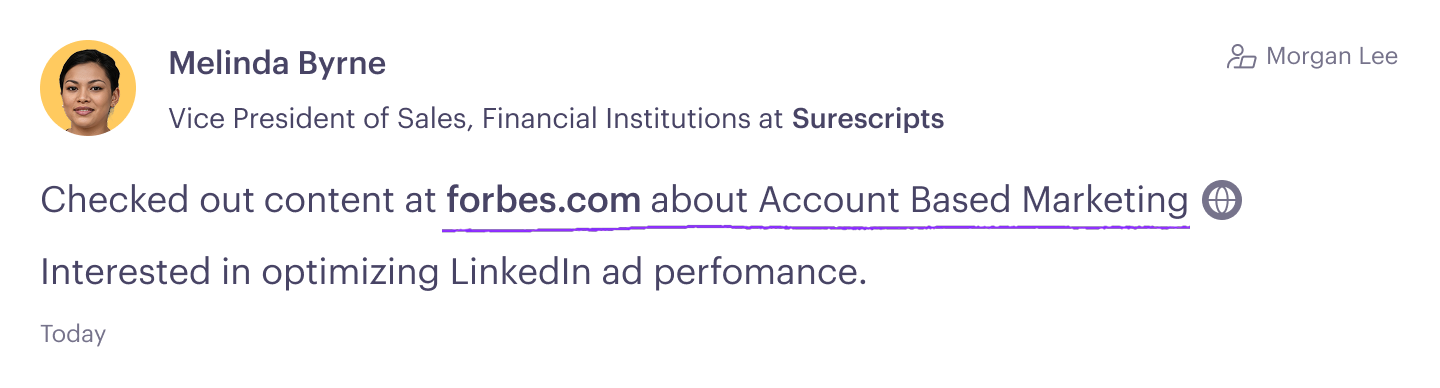
What it is: A specific person in your target account read content about a relevant topic on a third-party website (Forbes, industry blogs, etc.). You see who read it, where they read it, and what topic it was about.
Why it matters: This person is actively researching. They didn’t stumble onto this content by accident.
How to use it: Reference the topic — not the article or the fact that you know they read it. Lead with an insight about that topic that shows your expertise.
2. Search intent
Zero-click search shouldn’t mean zero signal. See buyer interest even when their research stays inside AI summaries.
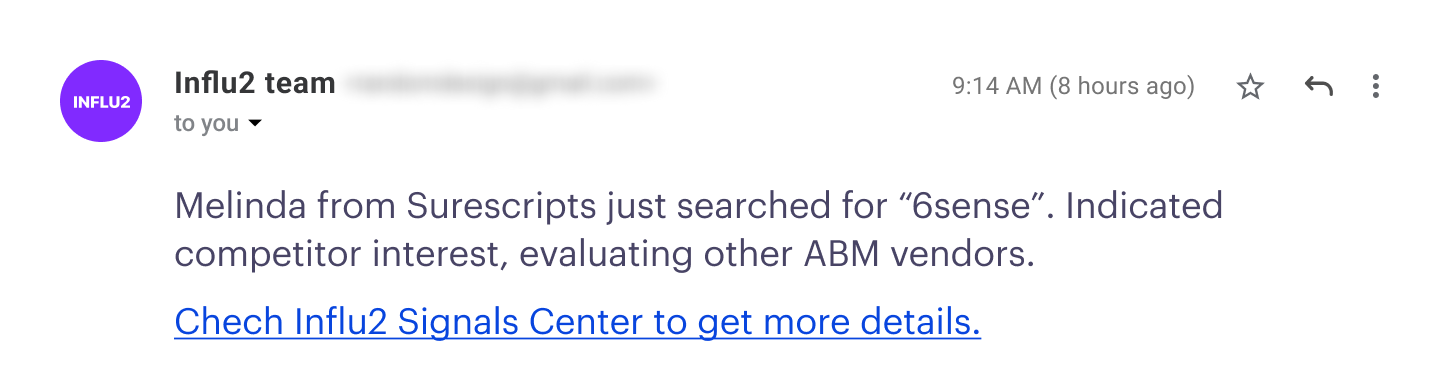
What it is: A target contact searched Google for a keyword that matters to your business. This works even when searches never result in a click — Influ2 captures the search query itself, not just clicks.
Why it matters: Search is the earliest stage of buying. If you show up now, you’re shaping their thinking before competitors arrive.
How to use it: Lead with the problem they were searching about. If they searched for a competitor name, that’s an even stronger signal — they’re actively evaluating.
3. Social media
Social chatter, distilled into buyer intent. See what matters to buyers from their social posts without manual tracking.
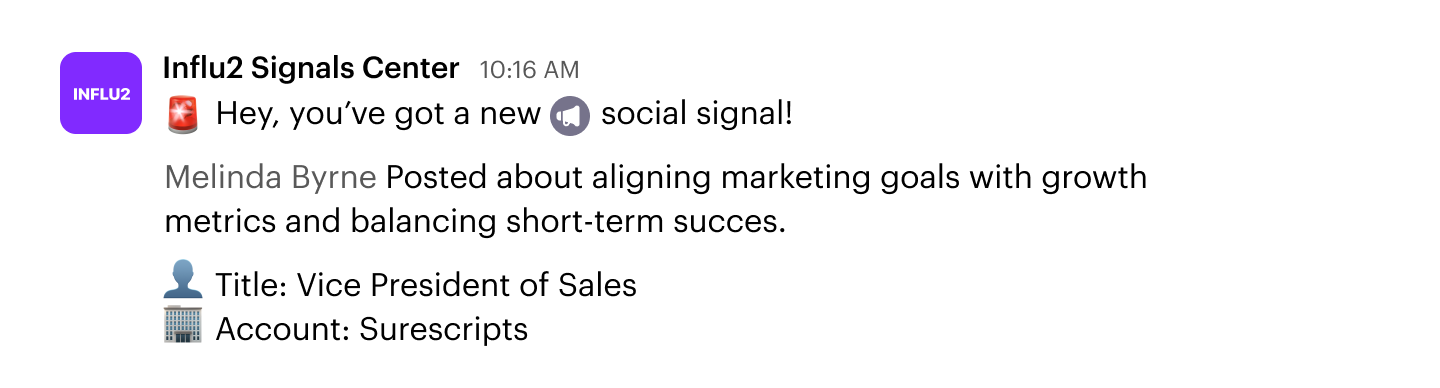
What it is: A target contact posted content on LinkedIn that indicates buying-relevant interest. Influ2 uses AI to filter out noise and only surface posts that align with topics you care about.
Why it matters: When someone posts publicly about a challenge your product solves, they’re raising their hand — and giving you their exact words to use in outreach.
KD Dorsey’s warning about social signals: “We have to make sure we understand the difference between intent and interest. Too often, reps see social intent and immediately think it’s interest. Then they go too fast and too aggressive. You only get to shoot your shot once or twice. Make sure it’s strong.” |
How to use it: Engage with the post first (thoughtful comment, not a pitch). Then follow up with a message that references their specific words and adds value. Don’t leap straight to “we solve this, let’s book a demo.”
4. Website Visits
See who's visiting your website and what they’re looking at—so you can align your next message.
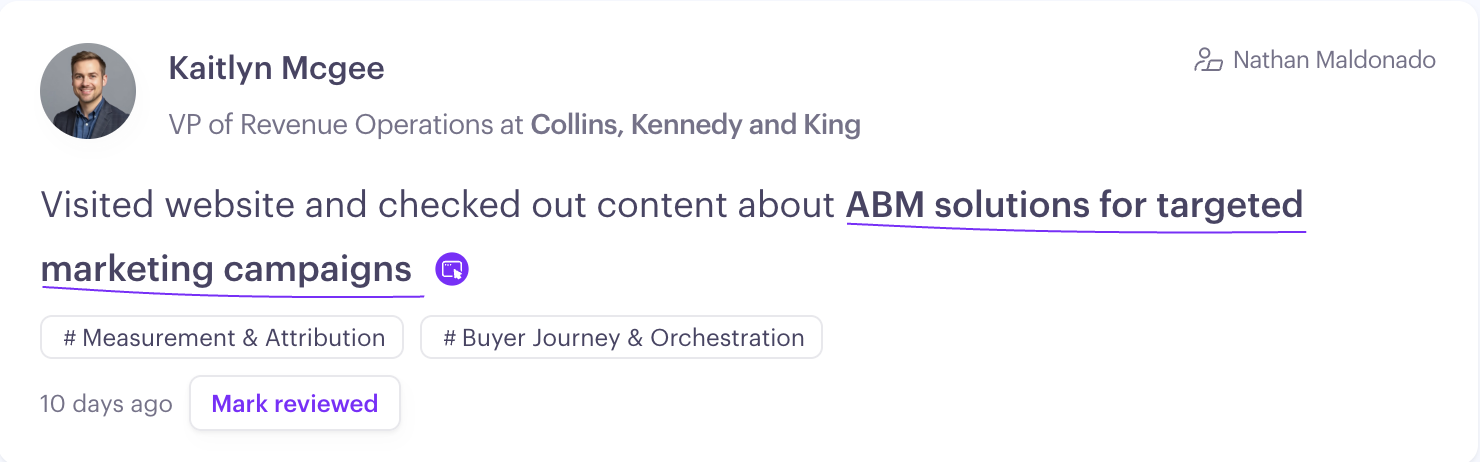
What it is: When a target contact visits your site, they're in an active evaluation mindset, often doing research well before they raise their hand. This is a critical window to reach out while the topic is still top of mind.
Why it matters: Website visits show a contact is actively evaluating your solution, creating a timely opportunity to engage while the topic is top of mind, and while they’re still forming an opinion about your brand.
How to use it: Similar to Content Intent, don't reference the visit itself or the specific pages they read. Lead with the topic they were exploring — share a point of view, a result from a customer, or a question that gets them thinking.
5. Engagement intent
Your marketing team isn’t just waiting for intent — they’re generating it through ads. See what resonates with each buyer based on which message drives a click.
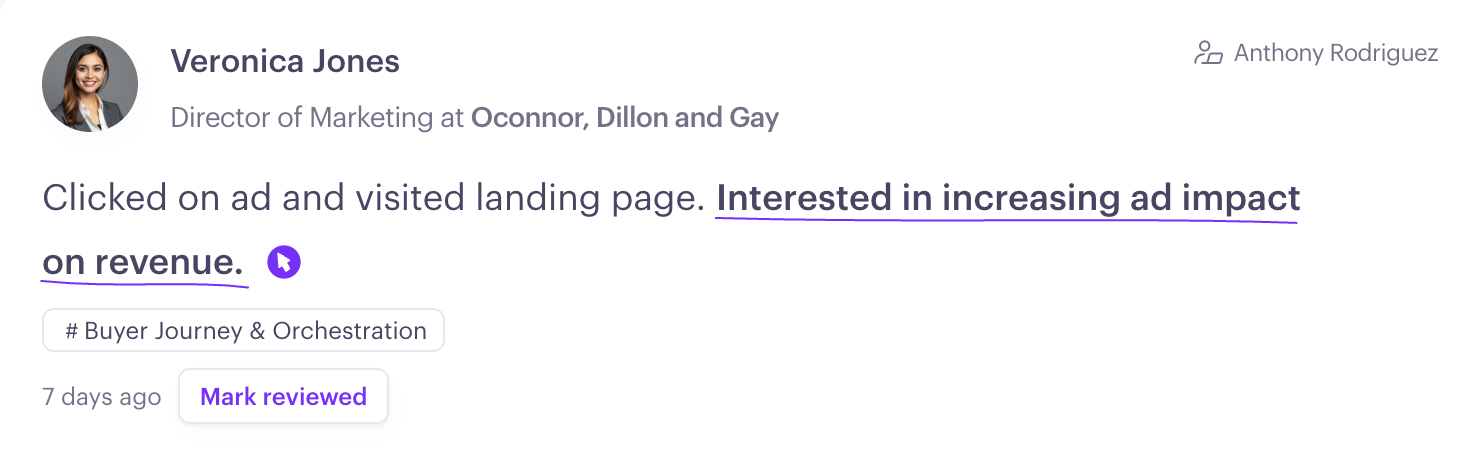
What it is: Your marketing team is running contact-level ads targeting the exact people you’re trying to reach. When someone clicks an ad, you see who clicked, which ad, and when.
Why it matters: This is your warmest signal. You know (a) exactly which message resonated (the ad they clicked), and (b) the prospect already recognizes your brand. Your email is no longer truly cold.
How to use it: Mirror the value proposition from the specific ad they clicked. If the ad was about “focusing marketing and sales on the same prospects,” your email should be about that exact topic.
Please note: Access to these signals varies by company and depends on your team's Influ2 contract. Not sure which signals are available to you? Reach out to your marketing team for details.
What's Next
Continue to the next module to keep progressing through the Signal-Selling Playbook! Or, return to the previous module to review.
Next Module: Where to find your signals
Back: Signals are not leads